◂ CONTENTS OTHER WORK · EUROPEAN COMMISSION · P. 22 SELECTED TWICE

OTHER WORK · TWO SQUADS, ONE YEAR

European Digital Education Hub

Two squads with the European Commission’s Digital Education Hub, across a year. One asked how data can inform the design of learning spaces. The other asked how public–private partnerships shape AI adoption in education across Europe.

ROLEDUBLIN · BRUSSELS · ONLINE · 2025
JOB TITLEResearch Collaborator
QUESTI wrote the section on data-informed design through learning and space analytics for the Future Classrooms report, and contributed to the framework on AI adoption in education.
TEAMEducators, researchers, designers, policymakers and technologists from across Europe, working in small sub-groups.
HOW IT RAN

A workshop, then months of squad work

SQUAD 1 · FUTURE CLASSROOMS · DUBLIN, JULY 2025
Learning and space analytics Dublin opened with a study visit to Trinity College Dublin, then empathy mapping and scenario design. I sat in the sub-group on data-informed design and wrote the section on learning and space analytics: what a space can reasonably tell you about learning, and where the line sits between designing with data and surveilling the people in the room.
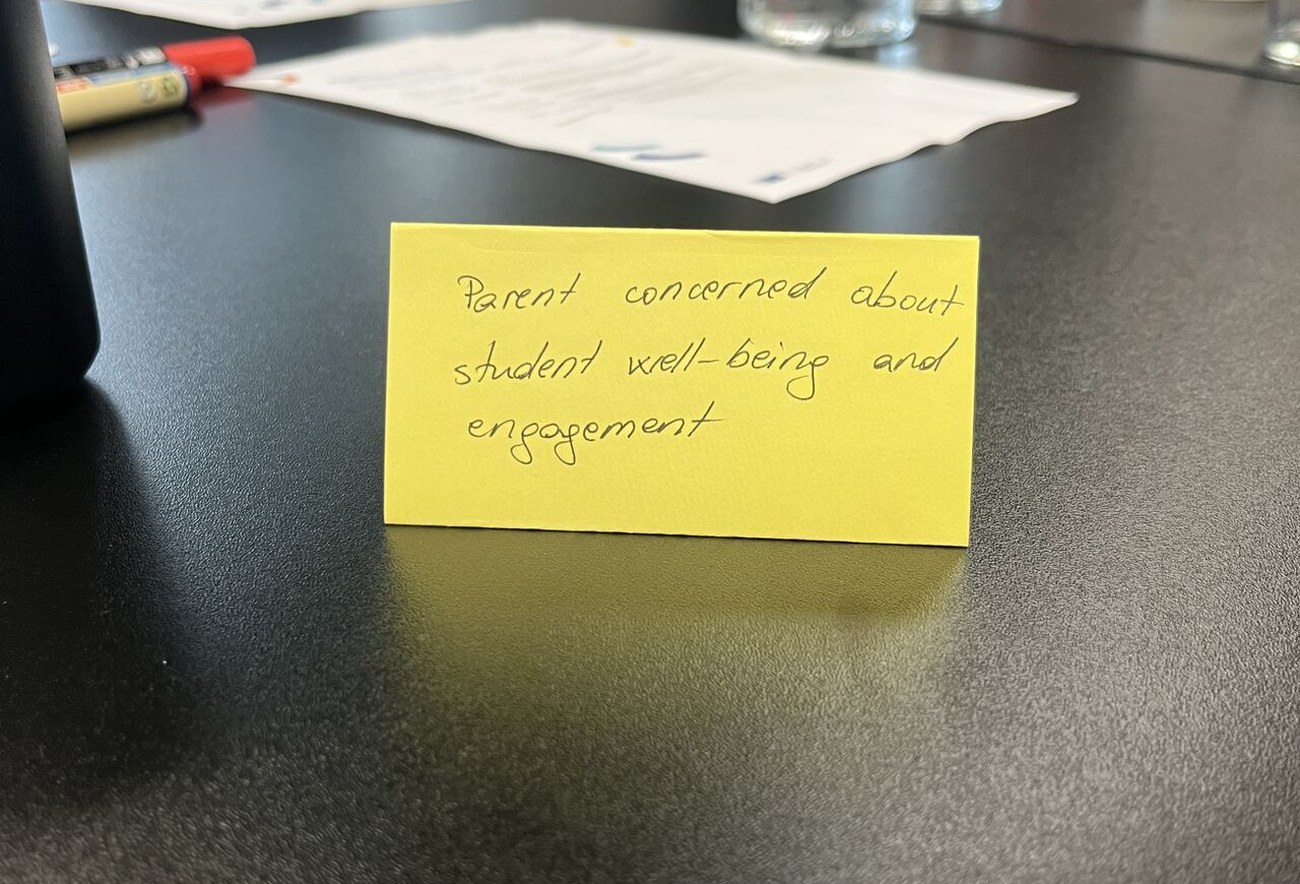
A folded yellow card standing on a dark workshop table, handwritten: Parent concerned about student well-being and engagement. A marker and a printed handout lie beside it.
DUBLINEmpathy mapping. Each card names whose point of view the next scenario has to hold.
WHAT CAME OUT · A REPORT SECTION AND METRIC CARDS
SQUAD 2 · AI ADOPTION IN EUROPE · BRUSSELS
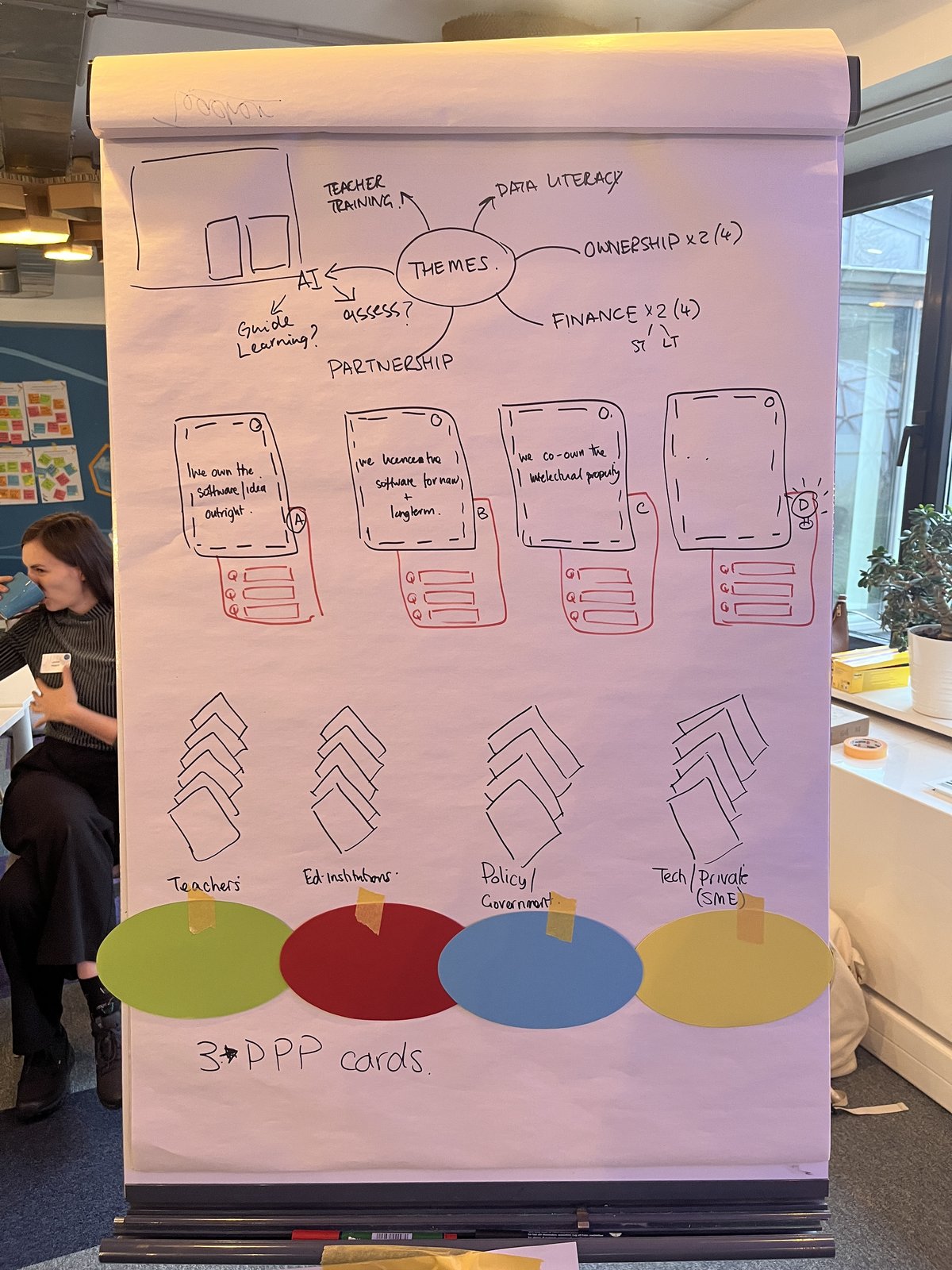
Public–private partnerships and AI adoption The arrangements are opaque, they vary by country, and the people they affect most have the least visibility of them. The group built a set of game-like cards that walk someone through a partnership and make the policy space legible to the people who have to live with it.
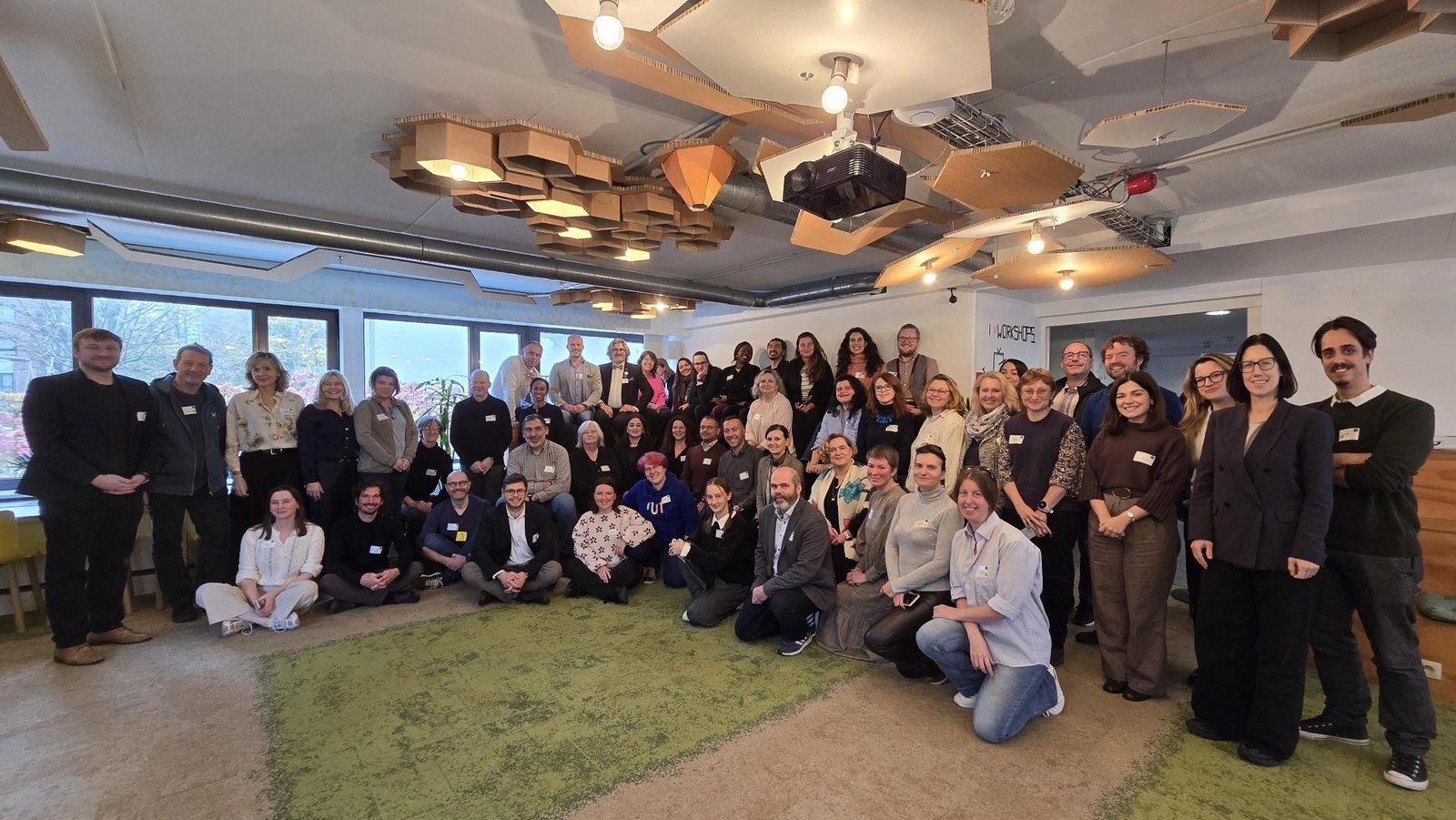
A large group of workshop participants standing and kneeling together in a bright room with hexagonal ceiling lights and a green rug.
BRUSSELS · NOVEMBER 2025The whole workshop.
A full flipchart on an easel in a workshop room. At the top, a circle marked Themes branches to teacher training, data literacy, AI, assessment, partnership, ownership and finance. Below it, four card outlines are drawn, then four stacks of cards over coloured circles labelled teachers, education institutions, policy and government, and tech and private SMEs, with 3+ PPP cards written underneath.
BEFOREThe whole flipchart, before the sticky notes went on: the themes at the top, the first card outlines, and the four groups the deck is for.
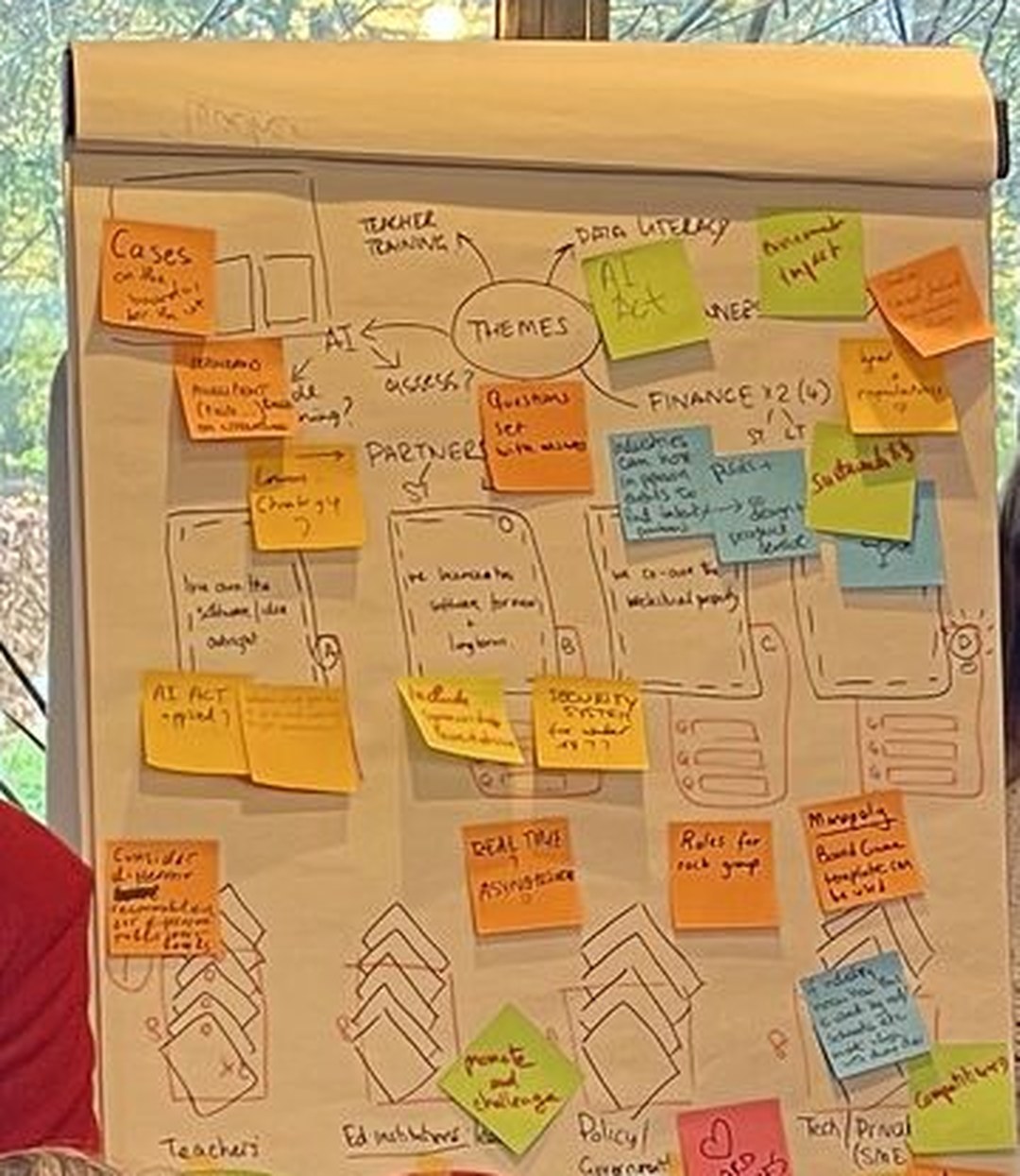
The same flipchart covered in orange, yellow, blue, green and pink sticky notes over the themes, the card outlines and the card stacks.
DURINGThe same flipchart once the sticky notes went on.
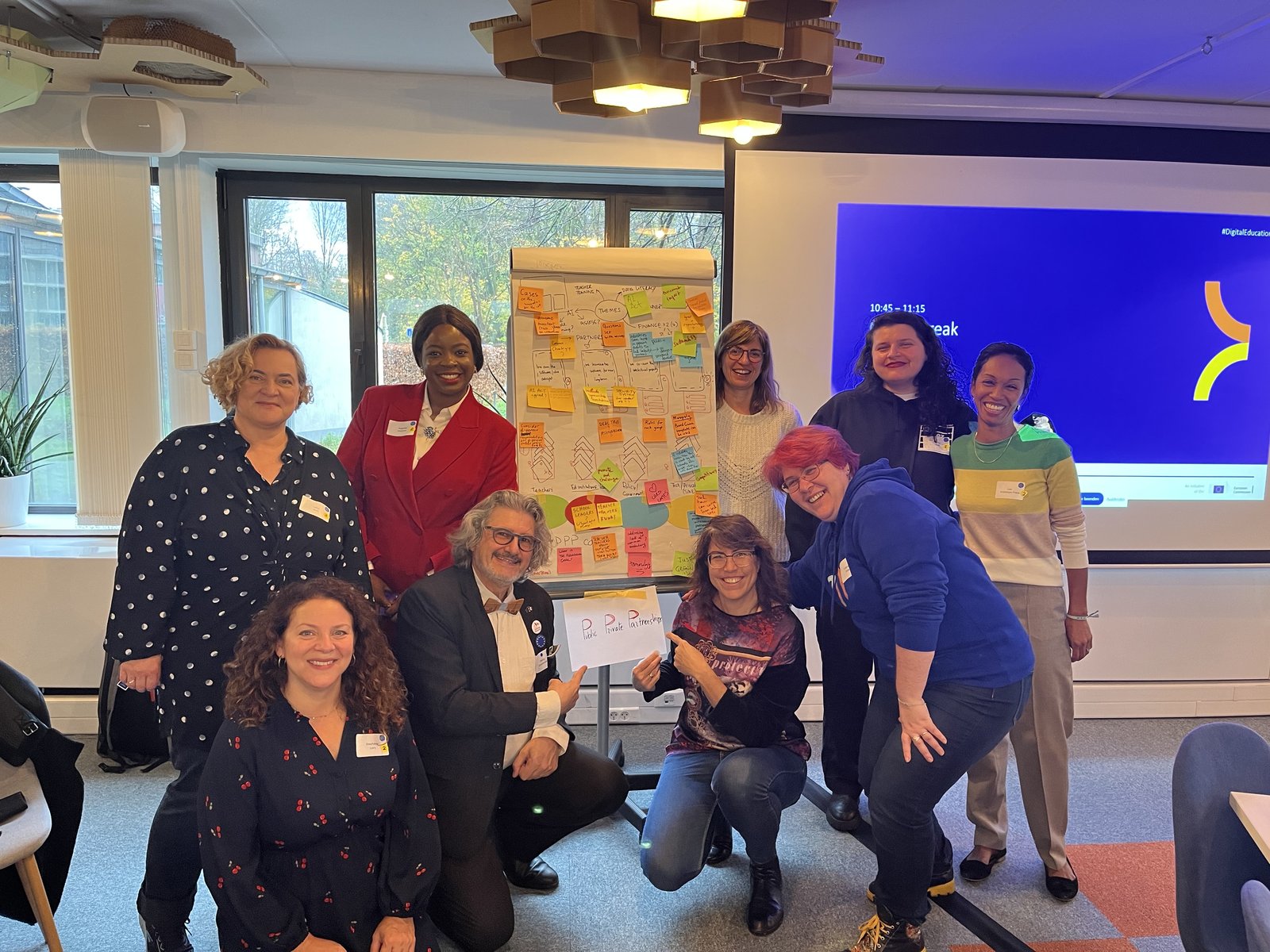
A group of nine people posing in front of the flipchart covered in sticky notes, some standing and some crouching, one holding up a sheet of paper.
AFTERThe squad with the finished flipchart.
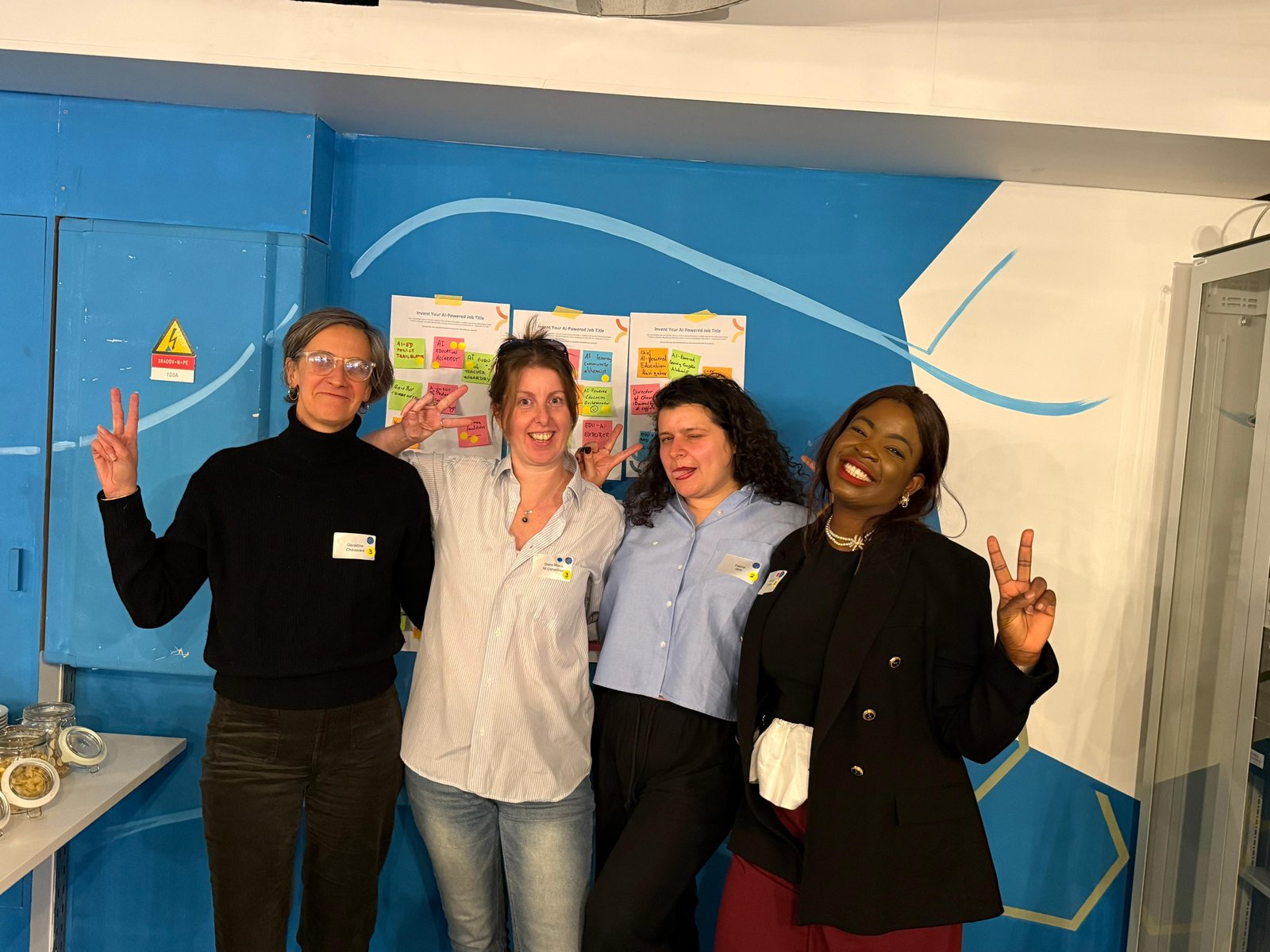
Four people standing close together in front of a blue wall with sticky-note sheets pinned behind them, two making peace signs.
THE ROOMAt the Brussels workshop.
WHAT CAME OUT · A CARD DECK FOR THE ROOM
WHAT IT CHANGED

Where it went next

The space analytics work taught me how much physical space matters to learning analytics. That led directly to designing offline, tactile discovery toolkits that bridge a physical room and a digital service.

Both squads were rooms where nobody shared my background, and the work had to hold across ten or more national systems at once. It is the reason the Beeline?BEELINEThe Greater Manchester service that helps young people up to 25 explore careers and find a next step. metrics framework is written to be read by a delivery team, a programme board and a community partner in the same way.

LINKED QUEST · BEELINE UNPLUGGED ▸